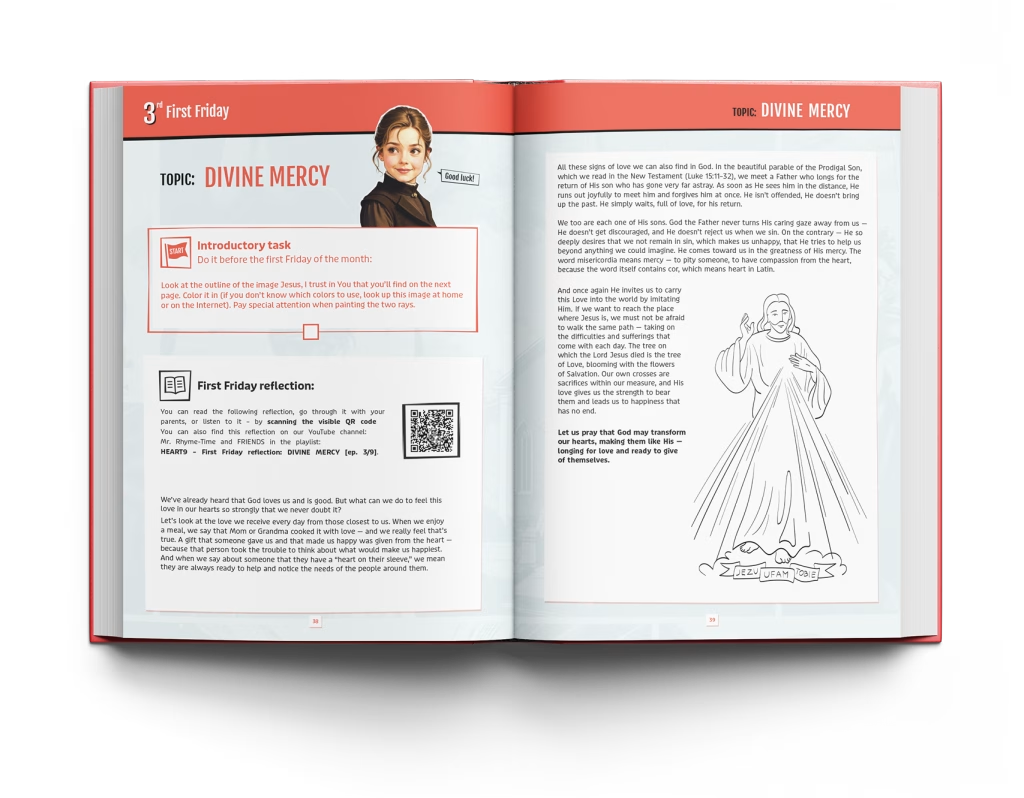

Give your child a ticket to Heaven!

Encourage your child to experience the devotion of the First Fridays and together hold on to Jesus’ promise that leads the heart toward Heaven.

Give your child a ticket to Heaven!

Encourage your child to experience the devotion of the First Fridays and together hold on to Jesus’ promise that leads the heart toward Heaven.
Why has Heart9 become such a hit among children?

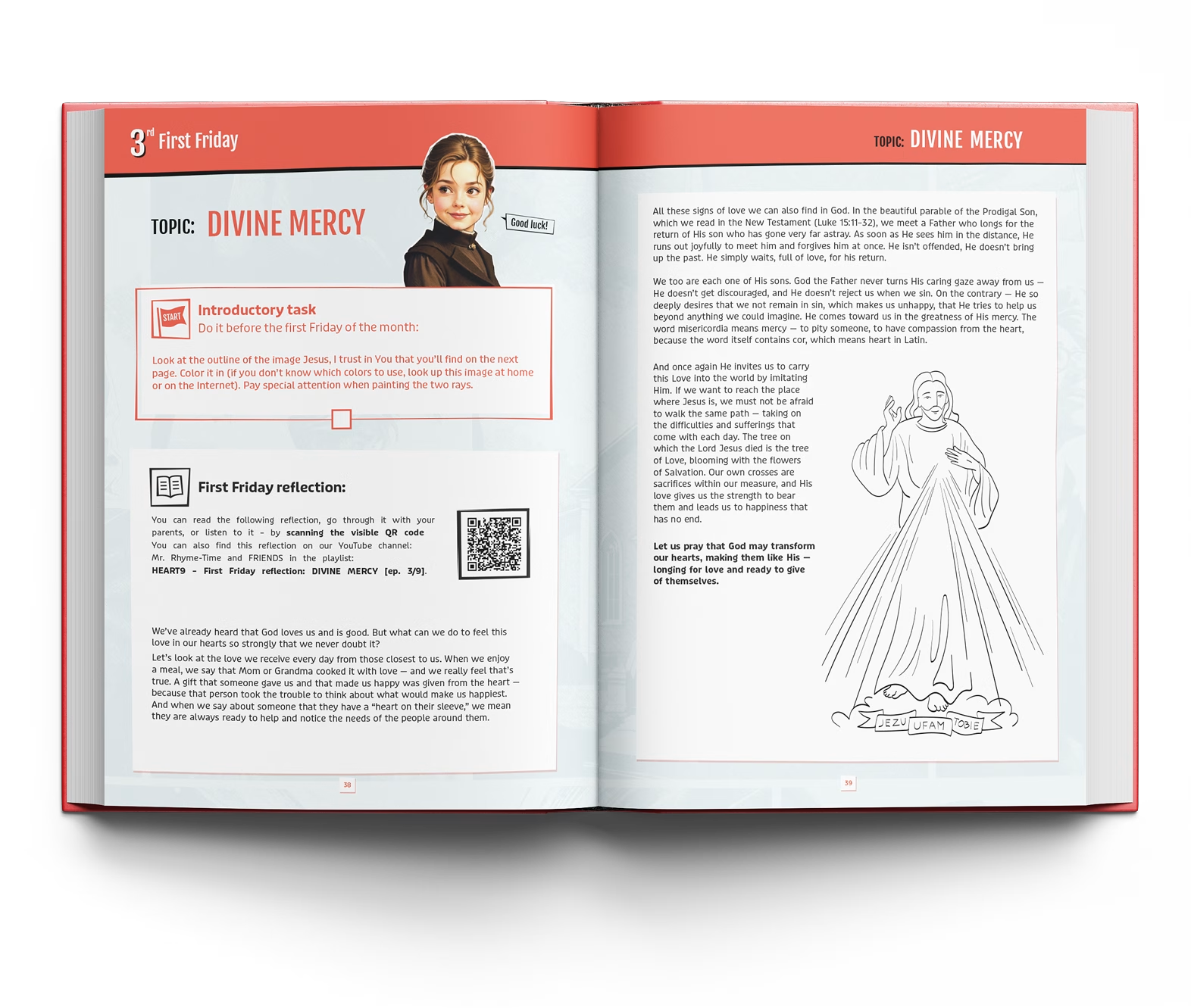
Heart9 is a book that helps children (and parents!) experience the devotion of the Nine First Fridays in a simple, understandable, and engaging way. Step by step, it guides them through preparing for Confession, taking part in the Eucharist, and building a relationship with Jesus. It contains short catecheses, challenges, and materials that help turn faith into real actions “here and now.” It is also an invitation for the whole family to discover the love of Jesus’ Heart together and grow in it every day.

25 thousand copies sold in 8 months

Recommended by bishops

19 musical hits for the whole family

28 QR codes with audio materials

27 practical challenges to complete
,,I would like to draw your attention to this proposal. Heart9 is something we have known for a long time, but renewed, revitalized, and presented in a good educational form. I recommend it.”

Archbishop Adrian Józef Galbas SAC

,,For the first time in my life, I was moved to tears with delight over a book. I wholeheartedly recommend it to priests and parents!”

Fr. Zbigniew Ptak OSPPE

,,As a parish priest, I was searching for materials like this. Now I have finally found a beautiful resource and a beautiful method, which I recommend to pastors, parents, and to children themselves.”

Bishop Artur Ważny

How can you wisely support your child during this devotion?
Always with yourself. A child always looks at you first. That is why it is so important to give your own witness of faith, which will build credibility and become an alternative to the values of “this world.” How can your witness of faith be expressed?

  • In prayer – through your quiet witness of faithfully remaining in humble prayer before the Lord, which your child can notice in everyday life
  • In regular, preferably daily, examination of conscience, which leads to gradual positive changes in your own behavior
  • In participation in the life of the Church and frequent reception of the Sacraments
  • In apologizing and making amends for your own failures and in being ready to forgive
  • In being willing to make the effort to serve God and other people – even when we are tired or worried by different concerns
  • In striving toward the ideal, even though we are not perfect. A child will be a witness to our sins – unfortunately, this is also true. Yet we can rise again after our failures. We can witness the fact that we do not give up, but instead, full of hope and trust, we want to imitate Jesus and become better and more joyful.

The key element is, of course, participating in the Eucharist on the First Friday of the month and receiving Holy Communion in reparation to the Heart of Jesus – this is what the devotion is all about. In addition, we offer materials and challenges (some can be found online, the rest in the book) so that children can more fully and consciously engage their hearts, experience, and understand this devotion. Of course, this does not mean that every suggestion must be used. In one year of practicing the devotion, you may choose just one or two additional challenges each month, and in the next year focus on different ones.

It is good to develop a regular plan in which, as a family, we try to pause and reflect on this devotion and build a relationship with God. Of course, much depends on which time during the week is usually the calmest. In many families, Sunday works best for such a pause, but for others, an evening in the middle of the week may be better. Such a rhythm allows us to experience this devotion more deeply and open ourselves more fully to what God has prepared for us. And if everyday life disrupts this rhythm? Instead of giving up, let us look for solutions.

We should always begin with patient listening and a willingness to talk. It is good to avoid commenting on or judging a child’s behavior – instead, try to understand and sincerely notice what the child is feeling at that moment. Then it may be easier for us to understand what the child is going through and to help in an appropriate way – for example, by changing, while respecting the child’s needs, the way we spend time together. Even illness should not determine our plan for family activities connected with living out this devotion.

Of course, it may happen that, despite our sincere intentions, we are not able to answer every question that comes up while practicing this devotion or solve every problem a child may encounter. Do not be afraid to admit that you do not know something. Very often, simply talking and making the child feel heard can completely change the way they look at a difficulty and help clear up their doubts. Honesty in a relationship does not weaken your authority – pretending and lacking credibility do. Showing your child that you also do not know everything, but that you are searching and trying to grow in virtues, can become a very valuable testimony and an encouragement to follow your example. Remember that it is always worth asking and seeking support from trustworthy people around you (in the family, parish, community, school…).

It may sound surprising, but this is actually good news. It shows that you are not just “checking boxes” through prayers and tasks, but truly trying to experience this devotion consciously and deeply, and to accompany your child in it. And this is a very important condition for truly living it the way Jesus would want. If you notice this – it is always a chance to search for something more. We hope that in these materials you will find the guidance you need. Do not give up too easily!

Do not treat a drop in motivation or lack of interest in the devotion only as a sign of your own mistakes or poor choices in responding to your child’s needs. There are many more reasons in a child’s emotional and social space (media overstimulation, difficulties with concentration and focus, inability to experience silence, relationship crises…). And we adults ourselves – how often do we experience crises in our prayer life and responsibilities?

Certainly not. Avoid all-or-nothing thinking (for example: “If my child is not completely excited, then this makes no sense”). Our task is to sow and gather the harvest (even if the Sower sows where, humanly speaking, there seems to be no chance for growth). We will not always see the fruits of our work right away – sometimes we will have to wait a long time for them… And sometimes the goal may simply be for the child to have a foundation to which they can always return. This is exactly where we parents are being asked to help.

Of course, there is no perfect recipe here either… However, our involvement as parents is very important. If a child sees that for us this devotion is truly important, despite many other responsibilities, then our example itself can become motivating. It is worth setting reminders (for example in a calendar or app) or arranging special family activities for this time (such as family prayer). Keeping a personal notebook or journal with thoughts and experiences from this time, or planning and preparing a special meal to celebrate completing the devotion, are also good ideas that can strengthen motivation.

Instead of blaming one another (or ourselves), it is better to smile at each other with understanding and love (just as God smiles at us) and try once again from the beginning. After every stumble or fall, we truly can rise again beautifully – after all, this is what Jesus teaches us. And He, always full of merciful love, waits for our return!


Suggestions for conversation topics with children:

  1. When was the last time flowers appeared in your home? Do you remember what kind they were? For what occasion?
  2. And when you go to someone’s name day or birthday in the family, do you buy flowers then? Why? What do you want to tell the person through them?
  3. What are flowers like? What colors do they have? What do they smell like? Do you know the names of any flowers?
  4. Are flowers and feelings of love, gratitude, or happiness somehow connected? What kind of feeling is that?
  5. When do we feel happy? Do we show gratitude for it?

  1. Give a few examples of things that smell nice – do you often notice those smells? Do you like them?
  2. And now think of a few examples of things that make you cover your nose or run away from the place where such an unpleasant smell is coming from – do you notice those smells often? They are hard to ignore, right?
  3. What can we do when a smell bothers us so much that we want to avoid it? Run away? Hold our nose? Open a window?
  4. What would it be like if such an unpleasant smell always appeared close to people who sinned?
  5. How can we run away from sin? What can we do? And how can God help us (and want to help us)?

  1. When children draw the sun, it is often smiling – why do you think that is?
  2. We also often draw rays coming from the sun, even though we cannot actually see them – how do we know they are really there?
  3. What do these rays mean? What do they symbolize?
  4. It is similar with the rays flowing from the Heart of Jesus in the image “Jesus, I Trust in You” – did you know that? It is worth learning more about it.
  5. God loves us as much as it is possible to be loved, more than anyone else ever could. How can we experience that love if we cannot see it?

  1. What kinds of clothes and shoes do you have at home? For different seasons? For different occasions—school, sports…? What other occasions can you think of?
  2. Do you also have special clothes for going to Mass? Perhaps other members of your family do as well?
  3. How is it different from your other clothes? What does it express?
  4. We do not bring food, stuffed animals, schoolbooks, phones, or computers to church—why? What is unique and special about this gathering?
  5. How can a family prepare well for Holy Mass? What should we pay attention to and remember in order to experience it more deeply?

  1. When friends or guests arrive, how do they let you know they have come? Do they ring the bell? Knock? Call out? Whisper? Which of these ways do you like best?
  2. When you are in a large group of people, you probably hear many different sounds—some you like, some you do not, and some may even annoy you. Why do you think that is?
  3. Are you able to pay attention and appreciate the sounds and signals that you enjoy?
  4. Can you find a better response than anger or unkind words and thoughts when you hear sounds that irritate you?
  5. The Holy Spirit comes in many ways, but most often gently—in a quiet breath, a soft whisper, a gentle breeze… He desires to reach our hearts and fill them with love and peace. Do you try to live attentively so that you can recognize His signs?

  1. How many people from your family do you know? Can you name them by their first and last names?
  2. And how many people do you know who live near you, on the same street or in the same building? Do you know their names? Have you ever talked with them?
  3. What about in your parish? Do you know the people you pass when you come to church? The lady who always sits in the pew in front of you? Do you know her name?
  4. Maybe it is worth thinking about how you can notice the people around you and their needs more often?
  5. It is good to start with small things – perhaps simply a smile and an ordinary “good morning” or “God bless you”? Love longs to spread through small acts of kindness.

  1. What is your favorite hymn or song about Mary? What are its words about? When do you sing or listen to it?
  2. What is your favorite image or painting of Mary? Why is it your favorite? How is she portrayed in it?
  3. Why do you think there are so many images of Mary instead of just one?
  4. What does it mean to you that Mary is the mother of all people – and your mother too?
  5. Do you know people who have a special devotion to Mary? How is that devotion expressed? In what ways are they worth imitating?

  1. Where did these two women come from? Find out!
  2. Do you know the flags and capitals of those countries? What about the languages spoken there? Are they different or somewhat similar?
  3. In what ways are these two women alike? Is it only because they were both religious sisters?
  4. Jesus spoke with both of them. And they were obedient – what does that mean?
  5. Are we also able to listen so attentively and remain obedient, even when it is not easy or convenient for us?

  1. How many hours do you spend sleeping? How many on play? On studying?
  2. Try to calculate how much time each day you spend with the people you really like – your mom, your siblings, your favorite friends?
  3. How close is Jesus to you? Do you realize how precious and close you are to Him? How much time do you spend with Him?
  4. Have you ever waited at home, in your room, or in a school hallway, hoping that someone would come over, spend time with you, talk with you, and listen to you? How does that make you feel?
  5. Jesus waits in that way too – what can you do about it?

Downloads

What is the devotion of the First Fridays about?

The devotion of the First Fridays is a response to Jesus’ invitation. He desires that for 9 consecutive First Fridays of the month we receive Holy Communion and learn to love as He loves, drawing ever closer to His Heart. It is a beautiful path that helps us live well here and now – to love, to forgive, and to trust God every day. This devotion is also connected with a promise from Jesus:

“The all-powerful love of My Heart will grant to all those who receive Holy Communion on the First Friday of nine consecutive months the grace of final repentance, so that they will not die in My displeasure nor without the sacraments; and My Heart will be their safe refuge in the hour of death.”

Action Plan:

step 1.

Get the ebook by clicking the link

step 2.

Take part in Holy Mass and receive Holy Communion on every First Friday of the month (x9)

step 3.

Take on the challenges suggested in the book

What will you find inside the book?

  • 9 reflections about the Most Sacred Heart of Jesus
  • 19 musical hits for the whole family
  • 28 QR codes with audio materials
  • 16 beautiful portraits of holy boys and girls
  • 27 practical challenges to complete
  • 18 interesting facts and a practical examination of conscience

“It is the world’s first interactive and comprehensive pastoral tool that helps children experience this devotion deeply.”